
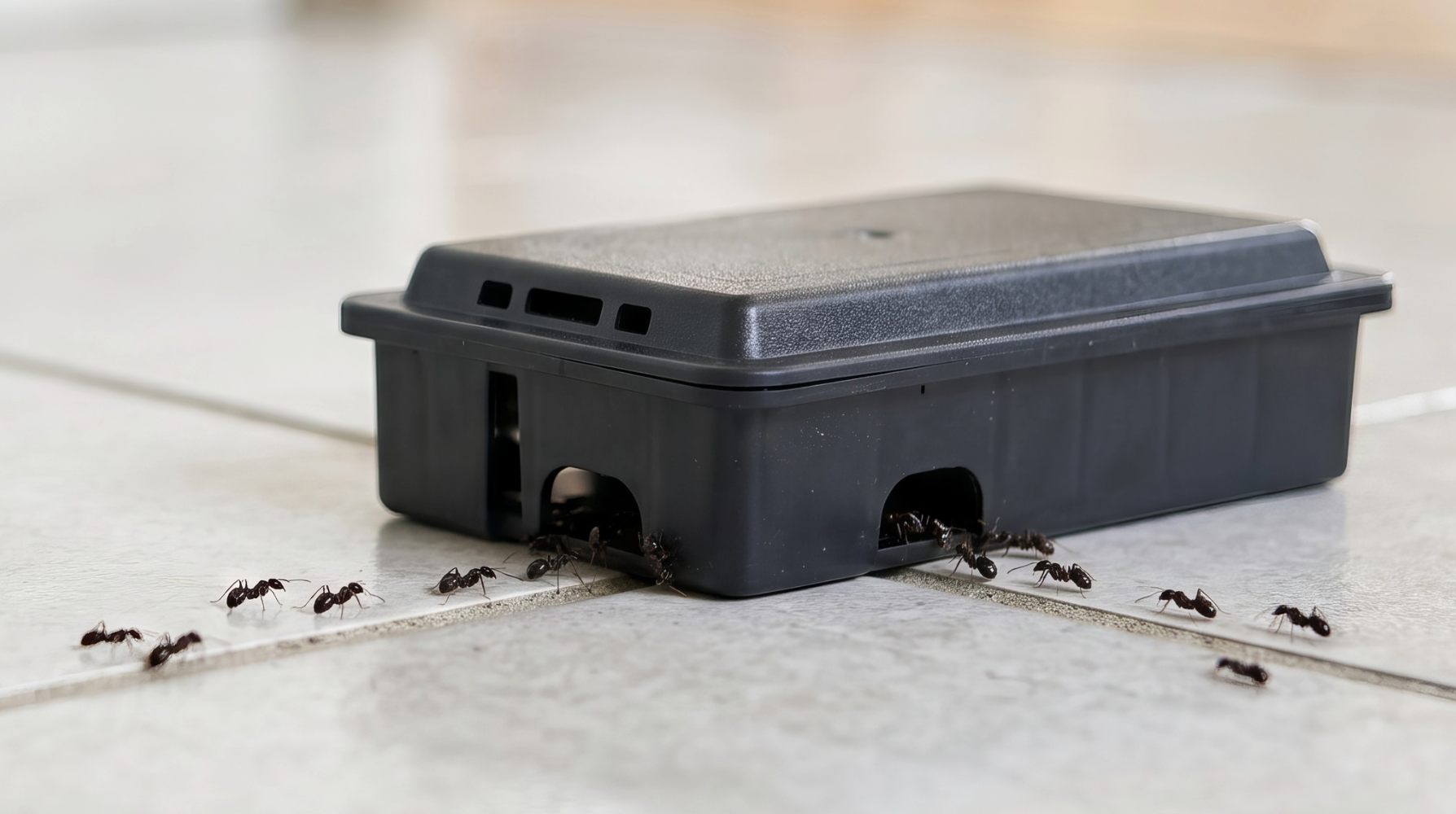
You carefully placed ant bait stations around your kitchen or the exterior of your home, waited for the ants to disappear, and… they’re still marching across your countertops. If this sounds familiar, you’re not alone. Over-the-counter ant baits can be effective in certain situations, but there are several reasons they often fail to eliminate an infestation completely.
Ant Baits Take Time to Work
One of the biggest misconceptions about ant bait stations is that they should work overnight. In reality, most liquid and gel ant baits are designed to work slowly.
Worker ants consume the bait and carry it back to the colony, where it’s shared with other workers, larvae, and eventually the queen through a process called trophallaxis (food sharing). Because the poison needs time to spread throughout the colony, most manufacturers recommend allowing at least 3 to 7 days before expecting noticeable results, while larger colonies may require 2 to 4 weeks for substantial control.
In fact, it’s common to see more ants shortly after placing bait. That’s actually a good sign because it means the bait is attracting foraging workers that are bringing it back to the nest.
The Bait Isn’t Attractive to That Ant Species
Not all ants have the same diet.
Some species prefer sugary foods, while others are more interested in proteins or grease. Carpenter ants, odorous house ants, pavement ants, Argentine ants, and other common New Jersey species can all have different food preferences depending on the season and the colony’s nutritional needs.
If you’re using a sugar-based bait but the colony is currently searching for protein, they’ll simply ignore it.
Many professional pest control companies carry multiple bait formulations specifically because no single product works for every ant species or every situation.
The Bait Stations Aren’t Placed Along Active Ant Trails
Ants don’t wander randomly. They follow scent trails laid down by scout ants.
If your bait stations aren’t directly along those established trails, the ants may never discover them. Placing stations several feet away from where ants are actively traveling dramatically reduces the chances they’ll find the bait.
Professionals spend time identifying travel routes, nesting locations, and entry points before deciding where bait should be placed.
The Colony Is Too Large for Store-Bought Baits
A small colony inside a wall may respond well to over-the-counter bait.
A mature colony with tens of thousands of ants, multiple satellite nests, or several queens is a different story.
Large infestations often require a combination of baiting, targeted treatments, and locating the actual nesting sites. Simply placing a few bait stations under the sink usually isn’t enough to eliminate an established colony.
The Ant Colony Has Multiple Nests
Many homeowners assume they’re dealing with one nest.
In reality, some ant species form multiple satellite colonies that remain connected. Even if one section of the colony is affected by bait, other nests continue producing workers.
This is especially common with Argentine ants, which are known for creating enormous interconnected colonies.
Professional ant inspections help identify whether multiple colonies are contributing to the infestation.
You’re Killing the Ants Before They Can Bring the Bait Back
This is one of the most common mistakes homeowners make.
Many people place bait stations while simultaneously spraying ants with store-bought insecticide or vinegar. Unfortunately, this often works against the bait.
When worker ants die before returning to the colony, they never deliver the bait to the queen or other ants. The visible ants disappear temporarily, but the colony survives and simply sends out more workers.
If you’re using bait, patience is critical. The goal isn’t to kill the ants immediately. It’s to allow them to carry the bait home.
The Bait Has Dried Out or Expired
Liquid and gel ant baits lose effectiveness over time.
Exposure to heat, direct sunlight, or dry indoor air can cause bait to harden or dry out, making it less appealing. Older bait stations that have been sitting in a garage or cabinet for several years may also lose their attractiveness.
Fresh bait is far more likely to be accepted by foraging ants.
The Colony Has Another Food Source
If ants have easy access to crumbs, sugary drinks, pet food, grease, or overflowing trash, they may have little interest in your bait station.
This is why pest professionals often recommend improving sanitation while bait is working. Removing competing food sources increases the likelihood that ants will consume the bait instead.
The Nest Is Hidden Where Bait Can’t Reach
Sometimes the ants you see are only a small part of the problem.
Colonies may be hidden inside wall voids, beneath concrete slabs, under landscaping, inside rotting tree stumps, or beneath mulch around your home’s foundation. If only a small number of worker ants are reaching your bait stations, the colony may never receive enough bait to eliminate the queen.
Finding the source of the infestation is often the most important step in long-term ant control.
Professional Ant Treatment in South Jersey
If you’ve been replacing bait stations for weeks and the ants keep coming back, it’s probably time for a professional inspection. Persistent ant activity often means the colony is larger, more complex, or located somewhere your bait simply can’t reach.
At ELDER Pest Control, we identify the ant species, locate where they’re nesting, and use professional-grade baiting and treatment methods designed to eliminate the colony at its source. Whether you’re dealing with ants in your kitchen, bathroom, garage, or around your business, our experienced technicians provide effective ant control throughout South Jersey.
Don’t waste more time and money on products that aren’t solving the problem. Contact ELDER Pest Control today to schedule a professional ant inspection and get lasting relief from ants.