
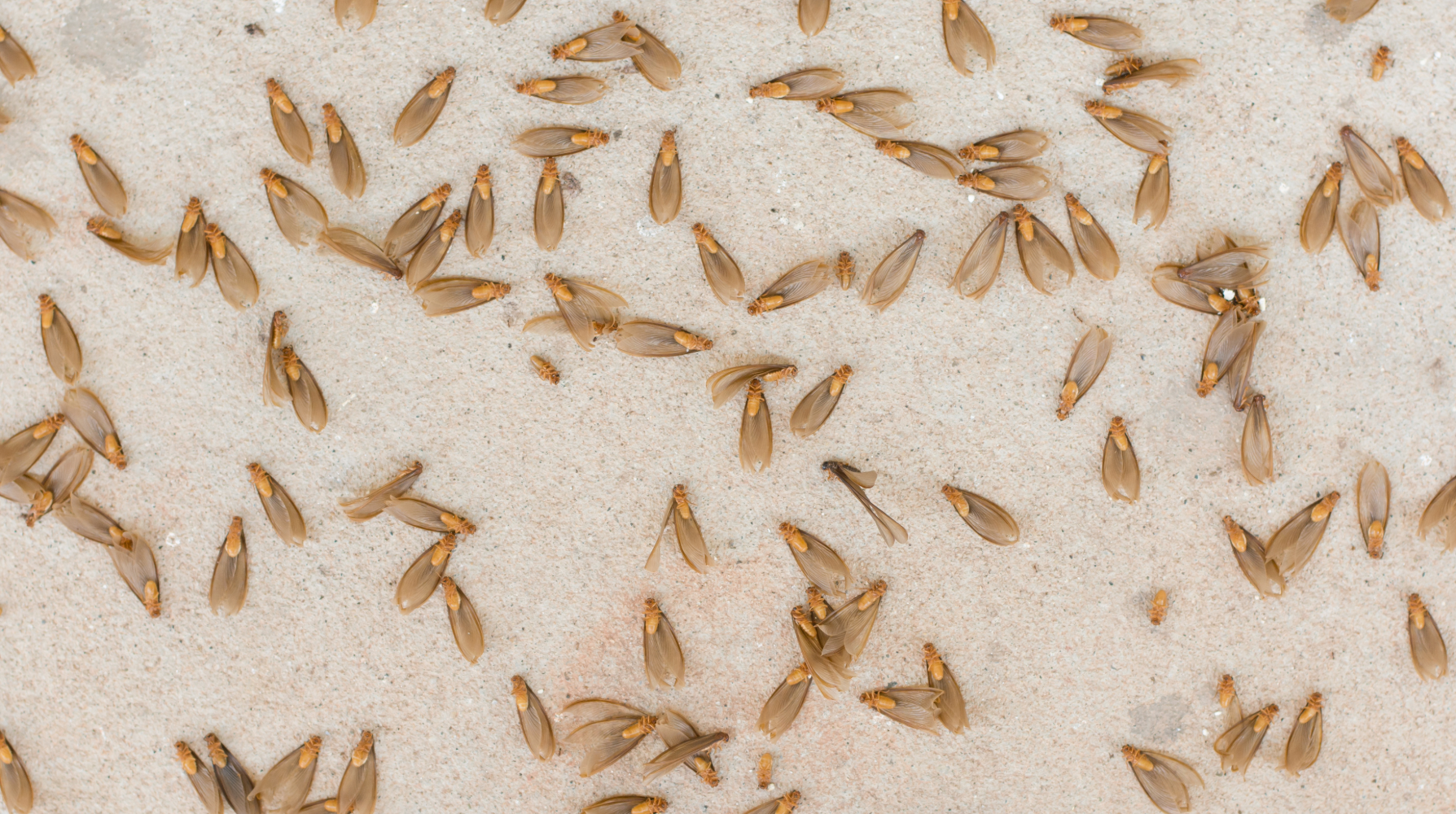
If you suddenly notice dozens or even hundreds of winged insects flying around your home, termites might be the reason. These insects are known as termite swarmers, and their sudden appearance is part of the termite reproduction process, and could be concerning.
Understanding why termites swarm, when it happens, and what their presence means for your home can help you determine whether you have a termite problem that needs attention.
What Are Termite Swarmers?
Termite swarmers are reproductive termites that leave an established colony to find a mate and start a new colony. Unlike the worker termites responsible for eating wood and maintaining the nest, swarmers have wings and are capable of flying.
Swarmers are typically dark brown or black, with two pairs of long, similarly sized wings. They are often mistaken for flying ants, but termites have straight antennae, a broad waist, and wings that are roughly equal in length.
A termite colony produces swarmers once it reaches a certain level of maturity. When conditions are right, large groups of reproductive termites leave the colony together in search of mates and suitable locations to establish new colonies.
What Causes Termites to Start Flying (Swarm)?
Termites don’t fly randomly. Swarming is a coordinated reproductive event triggered by environmental conditions and the maturity of an established colony.
Several factors contribute to termite swarming:
Warm Temperatures
Termite swarms are most common during warmer months when temperatures are consistently mild or warm. In New Jersey, subterranean termites typically swarm during the spring, although some species and colonies swarm at different times of the year.
Rainfall and Humidity
Rainfall and increased humidity are major triggers for termite swarming. Moist soil provides favorable conditions for reproductive termites to land, survive, and establish a new colony.
This is why homeowners often notice termite swarms after spring rainstorms or periods of warm, humid weather.
Mature Termite Colonies
A colony needs time to grow before it produces reproductive termites. Once a colony reaches maturity, it begins producing swarmers that leave the nest to reproduce and establish new colonies.
When the right weather conditions arrive, hundreds or even thousands of swarmers can emerge within a short period. In South Jersey, this is typically in the Spring when the weather starts warming up. We see a ton of termite activity in April and May.
What Happens During a Termite Swarm?
Termite swarming is a relatively short process, but it plays an important role in expanding termite populations.
Here’s how it works:
1. Swarmers leave the colony. When environmental conditions are favorable, winged reproductive termites emerge from their underground nest or an existing colony. Large groups often take flight at the same time.
2. They search for mates. Swarmers fly toward potential mates, often gathering around lights, windows, and other illuminated areas. After finding a partner, they land and shed their wings.
3. They find a suitable nesting location. Once paired, the reproductive termites search for a location with access to moisture and wood. Subterranean termites typically establish colonies in soil near a suitable food source.
4. A new colony begins. The reproductive pair becomes the king and queen of the new colony. The queen begins laying eggs, and the first generation of worker termites eventually takes over the responsibilities of maintaining and expanding the nest.
Not every swarmer successfully establishes a colony. Most die from predators, dehydration, or exposure before finding a suitable nesting location.
Do Flying Termites Mean I Have an Infestation?
Yes, flying termites is usually a sure sign of an existing termite infestation, but their presence doesn’t automatically mean your home is what is infested.
Termite swarmers can travel away from their original colony before shedding their wings and attempting to establish a new nest. This means you might see swarmers outside your home even when the colony is located somewhere else on your property or in the surrounding area.
However, finding flying termites inside your home is more concerning. If swarmers are emerging from walls, window frames, floors, or other areas inside the house, there is a strong possibility that an established colony is nearby.
Pay attention to these additional warning signs:
- Discarded wings: Termite swarmers shed their wings after finding a mate. You might find small piles of wings near windows, doors, and other entry points.
- Mud tubes: Subterranean termites build narrow mud tubes along foundations, walls, and other surfaces to protect themselves while traveling between their colony and food sources.
- Damaged wood: Termites feed on cellulose found in wood and other plant materials. Look for hollow-sounding wood, blistering paint, and damaged wooden structures.
- Termite droppings: Drywood termites leave behind small, pellet-like droppings called frass, which can accumulate near infested wood.
If you notice flying termites inside your home or find discarded wings near potential entry points, have the property inspected by a pest control professional.
How to Prevent Termites From Establishing a New Colony
You cannot prevent every termite swarm, but you can make your property less attractive to termites and reduce the conditions that encourage colony development.
A few practical steps include:
- Keep wood away from your foundation: Avoid stacking firewood, lumber, and other wood materials directly against your home.
- Address moisture problems: Repair leaking pipes, improve drainage, and eliminate standing water around your foundation.
- Maintain proper ventilation: Make sure crawl spaces and other enclosed areas have adequate ventilation to reduce excess moisture.
- Remove wood debris: Clear dead tree stumps, fallen branches, and other decaying wood from around your property.
- Pay attention to crawl spaces: Many South Jersey homes have crawl space foundations. Check for excess moisture, wood-to-soil contact, and other conditions that attract subterranean termites.
- Schedule termite inspections: Professional termite inspections help identify termite activity before it causes extensive structural damage.
These steps help reduce termite pressure around your home, but they do not eliminate an established colony. Termite control requires identifying the species, locating active colonies, and applying the appropriate treatment.
Professional Termite Treatment in South Jersey
Seeing flying termites around your home is a good reason to pay attention, especially if you notice discarded wings, mud tubes, or other signs of termite activity. Early identification helps prevent a small termite problem from becoming costly structural damage.
ELDER Pest Control provides professional termite inspections and treatment throughout South Jersey. Contact our team to schedule an inspection and protect your home from termites.