
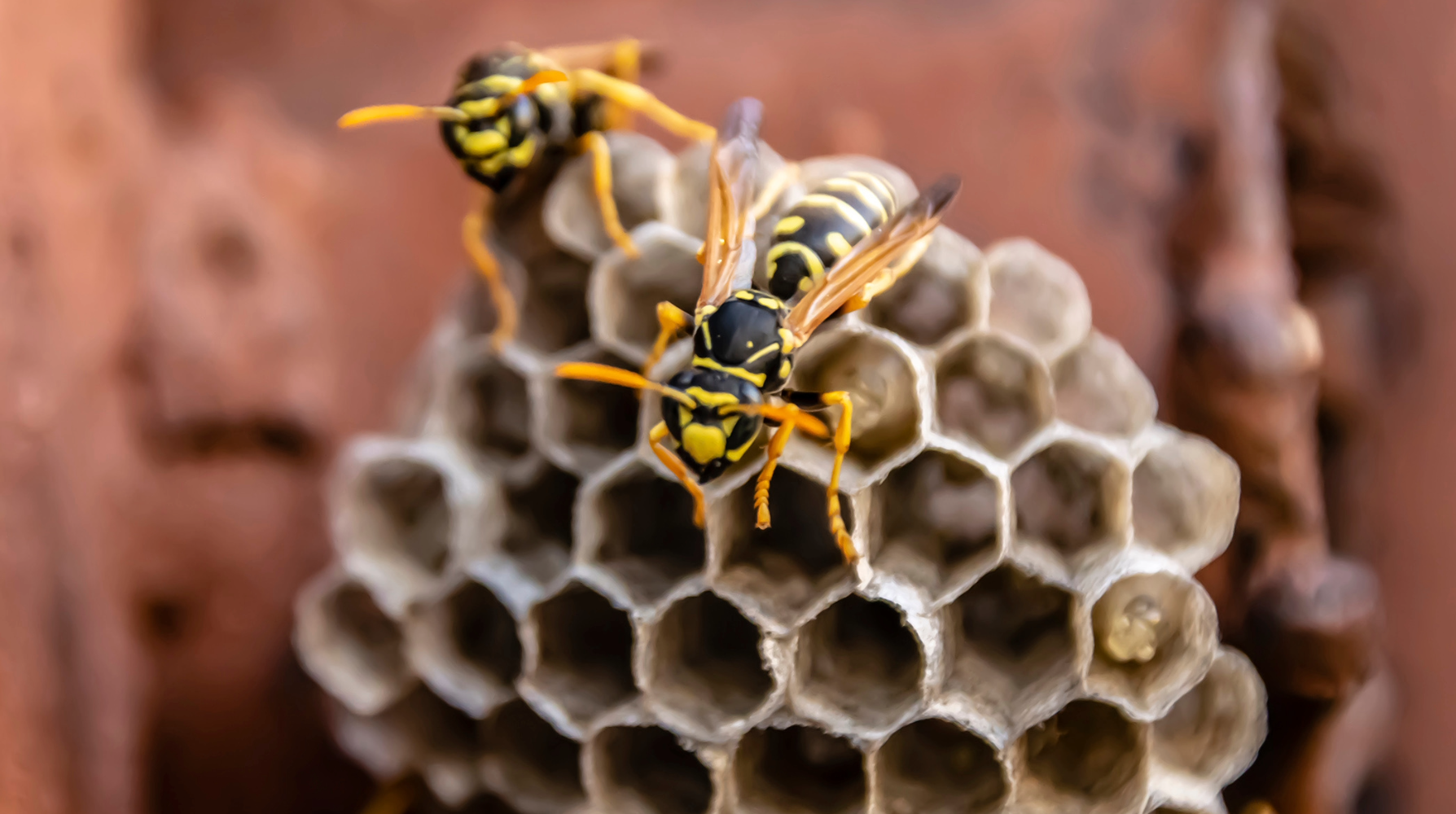
Each year as summer starts to turn to fall we often see a rapid increase in calls about yellow jackets. If you live in New Jersey, be prepared to see yellow jackets around your home in August and September. If you do notice them, what should you do? We prepared a guide that gives you an overview on all things yellow jackets.
What Are Yellow Jackets?
Yellow jackets are a type of social wasp known for their yellow and black markings, aggressive defense of their nests, and painful stings. They live in colonies with a queen, workers, and males, and they are especially active around homes, yards, outdoor picnics/catered events, and garbage cans during late summer.
Although yellow jackets are often mistaken for bees, they have different physical characteristics and behaviors.
What Do Yellow Jackets Look Like?
Yellow jackets are small, slender wasps with distinct yellow and black markings on their bodies. They have narrow waists, smooth bodies, and relatively few visible hairs compared with bees.
How Big Do Yellow Jackets Get?
Most yellow jackets measure approximately 3/8 to 5/8 of an inch long, depending on the species and whether they are workers or queens. Queens are typically larger than workers, while males can vary in size.
Their small size can make them difficult to distinguish from other wasps, especially when they are flying around your yard. However, their bright yellow and black markings and relatively smooth bodies are useful identifying features.
Yellow Jackets vs. Bees: What’s the Difference?
Yellow jackets and bees can both be found around flowers and outdoor spaces, but there are several important differences.
- Appearance: Yellow jackets have smooth, slender bodies with sharp yellow and black markings. Bees tend to have rounder bodies with more visible hair that helps them collect pollen.
- Diet: Bees primarily feed on nectar and pollen. Yellow jackets eat other insects and scavenge for sugary foods and proteins.
- Behavior: Bees are generally focused on collecting food, while yellow jackets may become defensive when people approach their nests.
- Stinging: Most honey bees can sting only once before dying, while yellow jackets can sting multiple times.
Yellow jackets also tend to become more noticeable around outdoor meals, trash cans, and sugary drinks in late summer. If you see numerous yellow and black insects repeatedly flying to and from one location, there may be a nest nearby.
Where Do Yellow Jackets Nest?
Yellow jackets build nests in a variety of locations around homes and commercial properties. The exact nesting location depends on the species, but many New Jersey homeowners encounter nests in the ground or inside wall voids.
Underground Nests
Many yellow jacket species build nests underground, often using abandoned rodent burrows or other existing cavities. You may notice workers repeatedly flying in and out of a small hole in your lawn, garden, or landscaping.
These nests can be particularly dangerous because they are easy to overlook. Mowing the lawn, using a string trimmer, or walking too close to the entrance can disturb the colony and trigger a defensive response.
Nests in Walls, Attics, and Porches
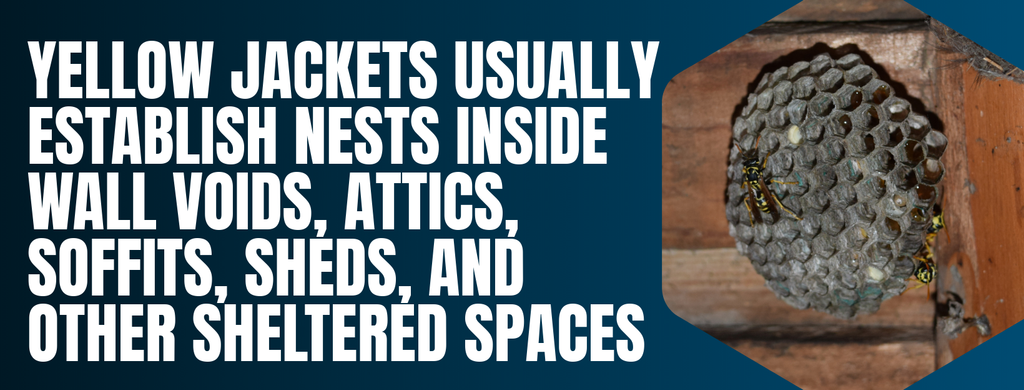
Yellow jackets usually establish nests inside wall voids, attics, soffits, sheds, and other sheltered spaces. Workers may enter through small gaps around siding, rooflines, vents, or utility openings.
If you notice yellow jackets repeatedly entering and exiting the same opening in your home, avoid sealing the hole yourself. Blocking the entrance without addressing the colony can cause the insects to seek other routes, potentially including openings into the interior of your home.
Aboveground Nests
Some yellow jackets build exposed or partially sheltered nests in shrubs, trees, and other protected locations. These nests are made from a paper-like material produced by chewing wood fibers and mixing them with saliva.
Not every yellow jacket nest is visible. A colony inside a structure or underground may go unnoticed until the number of workers increases during late summer.
When Are Yellow Jackets Most Active in New Jersey?
Yellow jackets are typically most noticeable in New Jersey during late summer and early fall, particularly in August and September. Their colonies have grown throughout the spring and summer, creating more workers that forage for food and defend the nest.
Why Are Yellow Jackets Worse in Late Summer?
During the early part of the season, yellow jacket colonies are relatively small. As summer progresses, the colony grows and workers become more numerous. Colonies typically grow to upwards of 5,000 yellow jackets if untreated.
Later in the season, the colony’s food requirements and changing food sources can bring yellow jackets into closer contact with people. They may gather around outdoor dining areas, open garbage cans, fallen fruit, and sugary beverages.
This is why a yard that seemed relatively free of yellow jackets in June can become difficult to enjoy by August.
How Long Do Yellow Jackets Live?
The lifespan of a yellow jacket depends entirely on its role in the colony.
Queen Yellow Jackets
A fertilized queen is typically the only member of the colony that survives the winter. After emerging from winter shelter in spring, she establishes a new nest and raises the first generation of workers.
Queens can live for several months and sometimes close to a year, depending on the species and environmental conditions.
Worker Yellow Jackets
Worker yellow jackets generally live for several weeks. Their numbers increase throughout the summer as the colony grows, allowing the nest to become much larger and more active by late summer.
What Happens to Yellow Jackets in Winter?
Most yellow jacket colonies die off as temperatures drop in fall and winter. The exception is the fertilized queens, which seek protected places to overwinter and start new colonies the following spring.
Yellow jackets generally do not reuse the same nest the following year. A new queen typically establishes a new colony, although a new nest may be built in the same general area if conditions are favorable.
Are Yellow Jackets Aggressive?
Yellow jackets are not necessarily looking to attack people, but they can become highly defensive when they perceive a threat to their nest. Their behavior is one reason they can be more dangerous than many homeowners expect.
Walking too close to a nest, mowing over an underground colony, or disturbing a nest inside a wall can provoke multiple yellow jackets to sting. Some species also release alarm pheromones when threatened, which can attract other workers to the area.
Yellow jackets may also become persistent around food and drinks without a nest being immediately nearby. Their presence around a picnic table does not automatically mean a colony is on your property, but repeated activity in one location is worth investigating from a safe distance.
What Attracts Yellow Jackets to Your Property?
Yellow jackets are attracted to several common features of residential properties, especially when they are searching for food or a suitable nesting location.
Sugary Foods and Drinks
Soda, juice, ripe fruit, desserts, and other sweet foods can attract foraging yellow jackets. During late summer, they may become a frequent nuisance around outdoor meals and gatherings.
Keep food covered, clean up spills promptly, and use garbage cans with secure lids to reduce their access to these food sources.
Meat and Other Protein Sources
Yellow jackets also feed on protein, including insects and scraps of meat. Outdoor cooking areas, uncovered garbage, and pet food left outside can attract them.
Suitable Nesting Locations
Sheltered wall cavities, gaps in structures, underground burrows, and undisturbed areas around landscaping can provide suitable nesting sites. While you cannot eliminate every potential nesting location, keeping up with property maintenance and sealing appropriate structural gaps can help reduce opportunities for nesting.
Many times we go to homes where there is just a small dime-sized hole in their soffit or around a window pane where yellow jackets are coming and going, and underneath we discover their full nesting site.
What Does a Yellow Jacket Sting Feel Like?
Yellow jacket stings are typically painful and may cause immediate burning, redness, swelling, and itching around the sting site. For most people, these symptoms remain localized and gradually improve over the next several hours or days.
Unlike honey bees, yellow jackets can sting multiple times because their stingers generally do not remain embedded in the skin.
What Should You Do if a Yellow Jacket Stings You?
If you are stung, move away from the area to avoid additional stings. Wash the affected area with soap and water, apply a cold compress to reduce swelling, and consider an appropriate over-the-counter pain reliever or antihistamine if you can safely take it.
Seek emergency medical attention immediately if you experience signs of a severe allergic reaction, including difficulty breathing, throat or tongue swelling, faintness, or widespread hives accompanied by other symptoms. Call 911 if a severe reaction is suspected.
Multiple stings, stings inside the mouth or throat, and stings involving someone with a known severe allergy also warrant prompt medical evaluation.
How to Get Rid of Yellow Jackets
The right treatment depends on where the nest is located, how large the colony has become, and whether the insects are nesting underground or inside a structure.
Can You Remove a Yellow Jacket Nest Yourself?
Some homeowners attempt to treat yellow jacket nests with store-bought sprays. However, treating a nest can be dangerous, particularly when the colony is large, the entrance is difficult to access, or the nest is located inside a wall or underground.
Disturbing a nest can cause multiple yellow jackets to emerge and sting. Spraying the visible insects may also fail to eliminate the queen and the rest of the colony.
Avoid digging up nests, plugging their entrances, or spraying into wall voids without a proper treatment plan. If yellow jackets are entering your home, nesting near a doorway, or repeatedly attacking people in the yard, professional treatment is the safer option.
Professional Yellow Jacket Treatment
Professional pest control technicians can identify likely nesting locations and determine the appropriate treatment based on the species, nest location, and level of activity.
Treatment may involve applying a targeted product to the nest or its access point. Nests inside walls and other enclosed areas may require a different approach than nests located in the ground.
Because yellow jackets can defend their colonies aggressively, professional treatment helps reduce the risks associated with locating and eliminating an active nest.
How Can You Prevent Yellow Jackets?
Although it is difficult to prevent every yellow jacket nest, a few precautions can make your property less attractive to foraging insects and help you identify nesting activity earlier.
- Keep garbage cans closed and clean up food waste promptly.
- Cover food and drinks when eating outdoors.
- Pick up fallen fruit and avoid leaving pet food outside.
- Inspect sheds, rooflines, and other structures for gaps that may allow insects to enter.
- Watch for repeated yellow jacket activity around holes in the ground or openings in your home’s exterior.
- Keep people and pets away from suspected nests until the colony can be assessed.
If you find a nest, do not approach it to investigate further. Keep your distance and arrange for appropriate treatment.
Yellow Jacket Treatment in New Jersey
Yellow jackets can make it difficult to enjoy your yard, especially during the late summer months when their colonies are at their largest. If you have yellow jackets nesting in your lawn, around your home’s exterior, or inside your walls, ELDER Pest Control can help.
Our team provides professional pest control services throughout South Jersey to help homeowners address yellow jacket infestations and reduce the risk of painful stings. Rather than attempting to treat a potentially dangerous nest yourself, let our team determine the appropriate treatment for your situation.
Contact ELDER Pest Control today to learn more about yellow jacket treatment in New Jersey and take back your outdoor living space.
Sources:
https://extension.psu.edu/german-yellowjackets
https://extension.psu.edu/getting-rid-of-paper-wasps-yellowjackets-and-other-stinging-insects
https://nj.gov/agriculture/divisions/pi/pdf/beeswaspshornetsbrocure.pdf
https://ipm.ucanr.edu/home-and-landscape/yellowjackets-and-other-social-wasps