
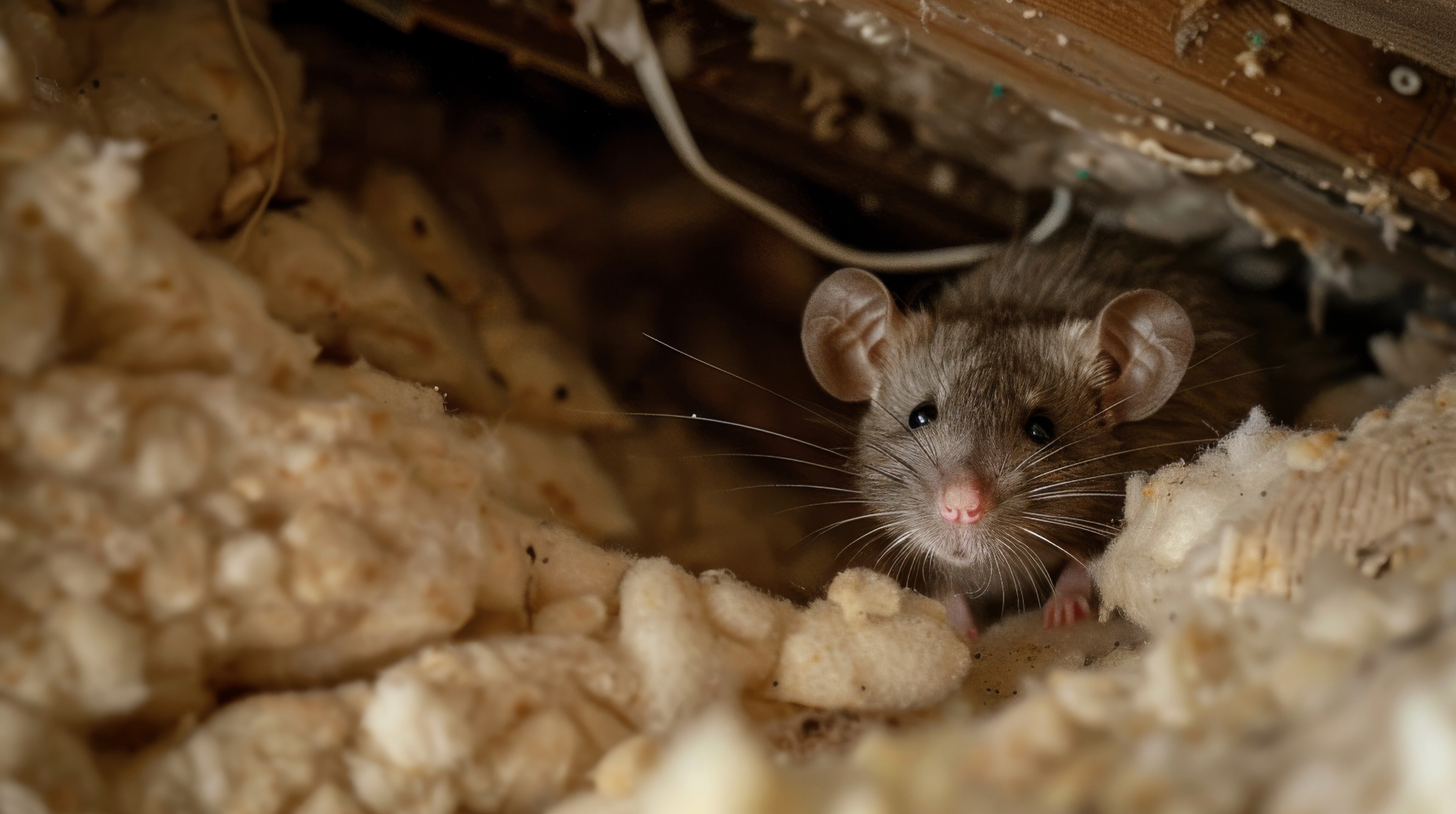
Discovering mice in your attic can be alarming, but understanding how they gain access is the first step toward solving the problem. Mice are remarkably adept at squeezing through surprisingly small openings, making attics particularly vulnerable to infestation. Let’s identify the common entry points mice use, what to do if you’re currently dealing with an infestation, and how to keep these unwanted guests out for good.
Common Entry Points for Mice into Attics
Mice can squeeze through openings as small as a dime—roughly 1/4 inch in diameter—which means your attic likely has multiple potential entry points.
Roof Vents
Roof vents, particularly those without proper screening or with damaged covers, provide easy access for climbing mice.
Utility Line Entry Points
Gaps where utility lines, pipes, or cables enter your home create convenient highways directly into your attic space.
Roofline or Eaves
The intersection where your roof meets the walls, known as the roofline or eaves, is another common entry point. Over time, gaps can develop in soffits, fascia boards, and where different building materials meet.
Missing Shingles
Damaged or missing roof shingles also create vulnerabilities that mice can exploit, especially after storms or as roofing materials age and deteriorate.
Attic Vents
Attic vents, gable vents, and ridge vents are designed to provide airflow but can become entry points if screens are damaged or missing. Mice are excellent climbers and can scale walls, trees, or downspouts to reach these elevated access points.
Chimney
Even chimneys without proper caps can serve as entryways, with mice either climbing down or nesting in the flue itself.
The moral of the story here is that there are many potential entry points for mice, especially to an attic, and more likely than not you are already seeing or hearing signs of mice in your attic if you are reading this article. Let’s figure out how you can get rid of them!

What to Do if Mice Are Currently in Your Attic
If you’ve heard scratching, scurrying, or squeaking sounds in your attic then you most likely already have a mice infestation and it’s important to take immediate action.
Start addressing the problem by conducting a thorough inspection of your attic to assess the extent of the infestation. Look for droppings, gnaw marks, nesting materials, and urine stains. Set snap traps or bait stations along walls and in areas where you’ve noticed activity, as mice tend to travel along edges rather than open spaces.
However, trapping alone won’t solve the problem if mice can continue entering your attic. You’ll need to identify and seal entry points while simultaneously removing the current population. For extensive infestations or if you’re uncomfortable handling rodent removal yourself, professional pest control services can provide more effective and comprehensive solutions.
How to Prevent Mice from Entering Your Attic
Prevention is always more effective and less costly than dealing with an active infestation. Start by conducting a thorough exterior inspection of your home, paying special attention to areas where mice typically gain access.
Attic Exclusion Tips
- Seal all openings larger than 1/4 inch using steel wool, copper mesh, or hardware cloth combined with caulk or expanding foam
- Install or repair screens on all vents, including roof vents, gable vents, and soffit vents, using hardware cloth with 1/4-inch or smaller mesh
- Ensure your chimney has a properly fitted cap
- Repair any damaged roof shingles, fascia boards, or soffits
- Trim tree branches and shrubs that are within 6-8 feet of your roofline
- Keep your attic clean and clutter-free
- Address any moisture issues
- Inspect your attic regularly – 2-3 times per year is recommended or when seasons change
The best way to prevent mice from entering your attic is having a professional rodent exclusion expert inspect your property and identify areas of concern, and then they can use best practices to seal them.

Common Questions from Homeowners with Mice in Their Attics
How Long Can Mice Live in the Attic?
Mice can live in an attic for months or even years if they have access to food, water, and shelter. The odds are pretty high that if they could enter the attic easily then they can come and go to collect those necessary resources and use your attic for breeding and nesting. A single pair of mice can reproduce rapidly, turning a small issue into a large infestation in a short period of time.
Can Mice get from the Attic into the House?
Yes. Mice can and often do travel from attics into living spaces through wall voids, ductwork, vents, and small gaps. If they are in your attic, it is only a matter of time before they find their way into other parts of the home.
How to Tell if There is a Mouse or a Squirrel in the Attic?
If you have not seen the invader yourself, then you can probably tell by the noises you hear whether the attic intruder is a mouse or a squirrel. Mice will make softer, quicker noises, and their scurrying will also be less aggressive than squirrels. You are also more likely to hear mice at night while squirrels will be more active during the day. Regardless of which one it is, you want to get them removed as soon as possible.
Professional Rodent Removal and Exclusion Services in New Jersey
ELDER Pest Control brings over 30 years of experience in rodent removal and prevention to South Jersey homes and businesses. Our technicians conduct comprehensive inspections to identify all entry points, including those in hard-to-reach areas homeowners typically miss. Our team uses professional-grade materials and techniques to properly seal openings, ensuring mice can’t chew through or bypass your repairs.
If you currently have an infestation, we won’t just remove the mice you can see, but we will address the entire infestation with strategic trap placement, monitoring, and follow-up services. Don’t let mice compromise your home’s safety, comfort, and value. If you’re hearing noises in your attic, finding droppings, or simply want to prevent rodent problems before they start, contact ELDER Pest Control today.