
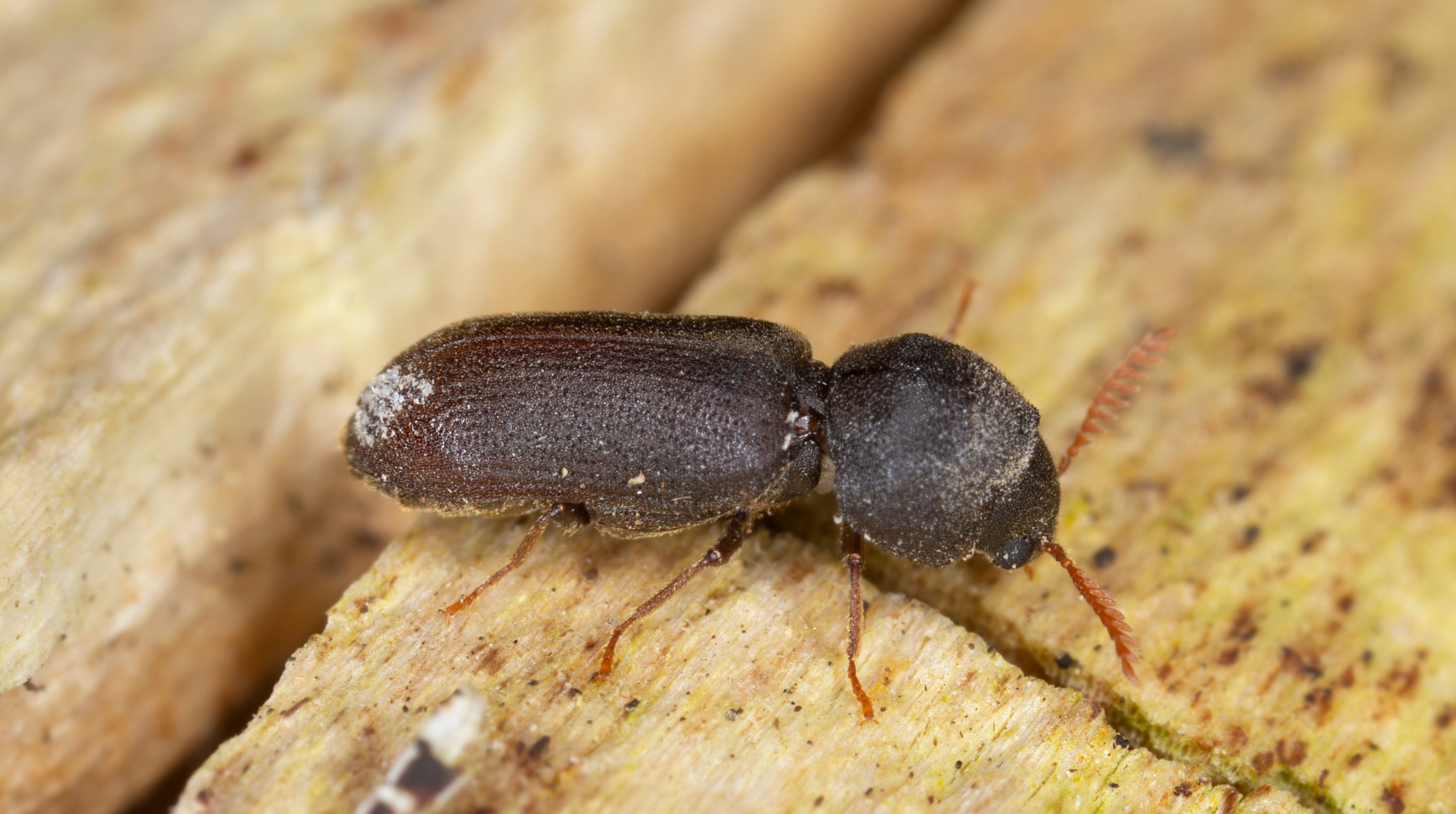
Powderpost beetles are small but destructive pests that can quietly damage wood in your home over time. Because they often go unnoticed until damage appears, early identification is key. For New Jersey homeowners, understanding how to spot, treat, and prevent powderpost beetles can help protect floors, furniture, and structural wood from long-term damage.
What Are Powderpost Beetles?
Powderpost beetles are wood-boring insects that lay their eggs in unfinished or untreated wood. Once the larvae hatch, they tunnel through the wood as they feed, eventually emerging as adults and leaving behind small exit holes. The name “powderpost” comes from the fine, powdery dust they leave behind, known as frass.
These beetles are most commonly found in hardwoods such as oak, ash, and hickory, making hardwood flooring, furniture, and trim especially vulnerable.
How to Identify Powderpost Beetles
Actually seeing a powderpost beetle is not as likely as seeing the trails or damage they leave behind. However, if you do notice a tiny brown/black piece of rice, well, it’s not old rice, it’s likely a beetle.
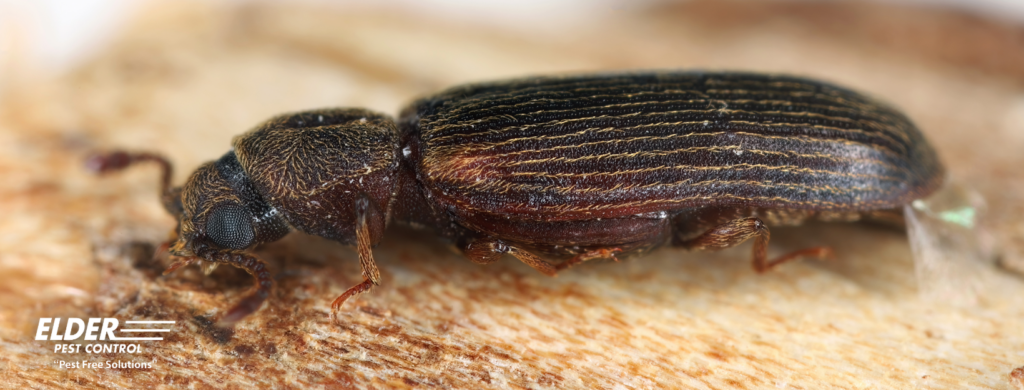
Powderpost beetles typically range in size from 1/16 to 1/4 inch long. They are usually reddish-brown to black in color and have slender, cylindrical or slightly flattened bodies. Because they are so small they are often overlooked.
Signs of Infestation
One of the most noticeable signs of powderpost beetles is the presence of fine, flour-like powder near wooden surfaces. This frass often collects below small exit holes and indicates active tunneling inside the wood.
You may also notice:
- Tiny round exit holes in wood surfaces
- Weak or damaged wood that may crumble over time
- Reappearing dust after cleaning, which suggests an active infestation
Powderpost Beetle Damage vs Termite Damage
Powderpost beetle damage is often confused with termite damage, but there are some key differences homeowners should know.
Powderpost beetles leave behind small, round exit holes and fine powder that resembles flour or talc. Their damage is usually limited to the interior of the wood, and the surface may appear intact until it becomes weak or brittle.
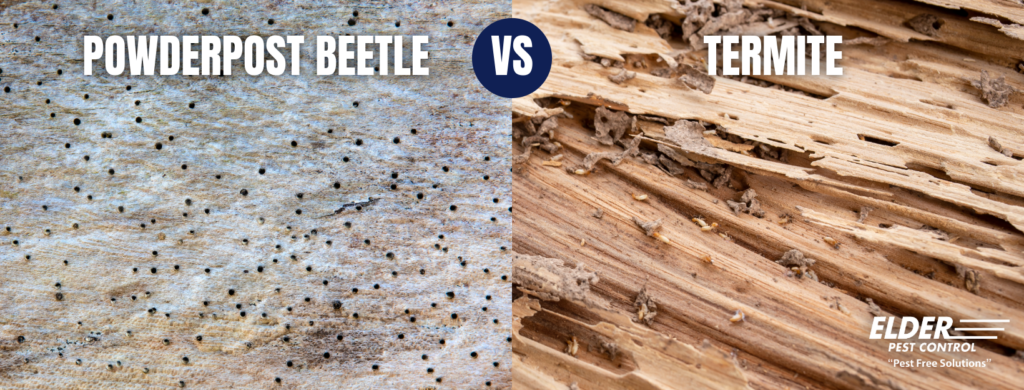
Termites, on the other hand, create mud tubes and leave behind hollowed wood with a more layered or honeycomb-like appearance. Instead of powder, termite damage often includes dirt or soil within the wood. Termites are also more likely to affect structural components of a home on a larger scale if left untreated.
If you notice signs of termites, you should begin professional termite treatments right away.
Powderpost Beetle Damage vs Carpenter Ant Damage
Powderpost beetle damage is also sometimes confused with carpenter ant activity.
Carpenter ants, unlike powderpost beetles, do not eat wood, but tunnel through it to create nesting galleries. Instead of leaving behind a fine powder, they leave behind coarse debris that looks more like sawdust, often mixed with bits of insulation, dirt, or insect parts. This material, also called frass, is typically found in small piles near openings in the wood.
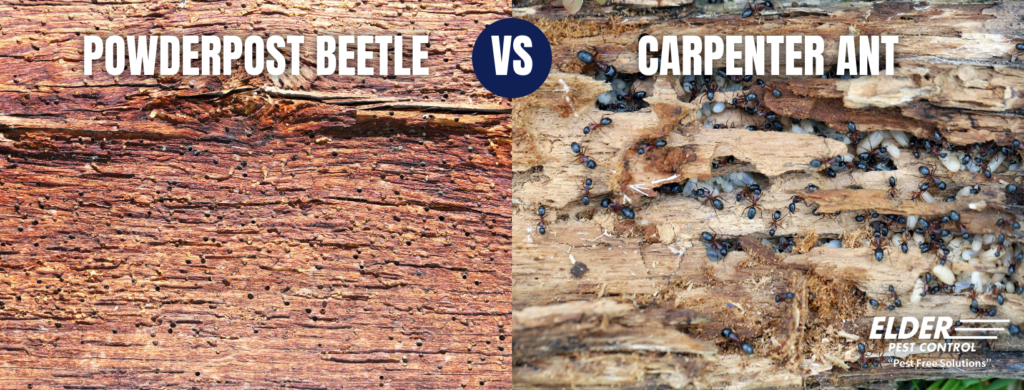
Another key difference is the appearance of the damage itself. Powderpost beetle damage is usually hidden beneath the surface, with small exit holes being the only visible sign until the wood becomes weak. Carpenter ant damage tends to be more hollowed out and may include smooth, clean tunnels inside the wood.
If you are unsure which pest is causing the damage, a professional inspection is the best way to accurately identify the problem and determine the right treatment.
Powderpost Beetle Treatment Options
If you do notice any signs of an infestation it is crucial to start a treatment plan right away. You might be able to start out with trying some DIY treatments at home if you have a small, compact case of beetles, but it is worth having a professional come out for an inspection if you continue to see the beetles or their damage.
DIY Treatment Methods
For minor infestations, homeowners may attempt to treat powderpost beetles using borate-based wood treatments or surface insecticides. Sanding and refinishing wood can also help remove surface-level infestations in some cases.
However, these methods often only address visible areas and may not reach larvae deep inside the wood. This can allow the infestation to continue unnoticed.
Professional Treatment
Professional pest control is typically the most effective way to eliminate powderpost beetles. Treatment may include:
- Targeted applications to infested wood
- Moisture control recommendations
- Monitoring to ensure the infestation is fully eliminated
In more severe cases, specialized treatments may be required to address widespread infestations throughout a structure.
How to Prevent Powderpost Beetles
Preventing powderpost beetles starts with reducing the conditions that attract them.
- Keep moisture levels low by using dehumidifiers and ensuring proper ventilation in basements and crawl spaces
- Seal or finish exposed wood with paint, stain, or varnish to make it less attractive for egg-laying
- Inspect wood products, furniture, and firewood before bringing them into your home
- Store firewood away from the house and avoid bringing infested wood indoors
Routine inspections can also help catch early signs of activity before significant damage occurs.
When to Call a Professional
If you notice recurring frass, new exit holes, or weakening wood, it’s a sign that powderpost beetles may still be active. Because these pests can live inside wood for extended periods, infestations can persist and spread if not properly treated. Professional pest control is especially important if the infestation involves structural wood, multiple areas of the home, or has been ongoing for some time.
Wood Destroying Insect Control in South Jersey
Powderpost beetles, as well as termites and carpenter ants, can cause costly damage if left untreated. Early detection and proper treatment can stop the problem before it worsens. ELDER Pest Control provides effective powderpost beetle treatment for South Jersey homeowners, using proven methods to eliminate infestations and protect your home’s wood structures.If you are noticing wood rot or damage in your home, don’t wait for the damage to spread. Contact ELDER Pest Control today to schedule an inspection and get a customized treatment plan that keeps your home protected.