
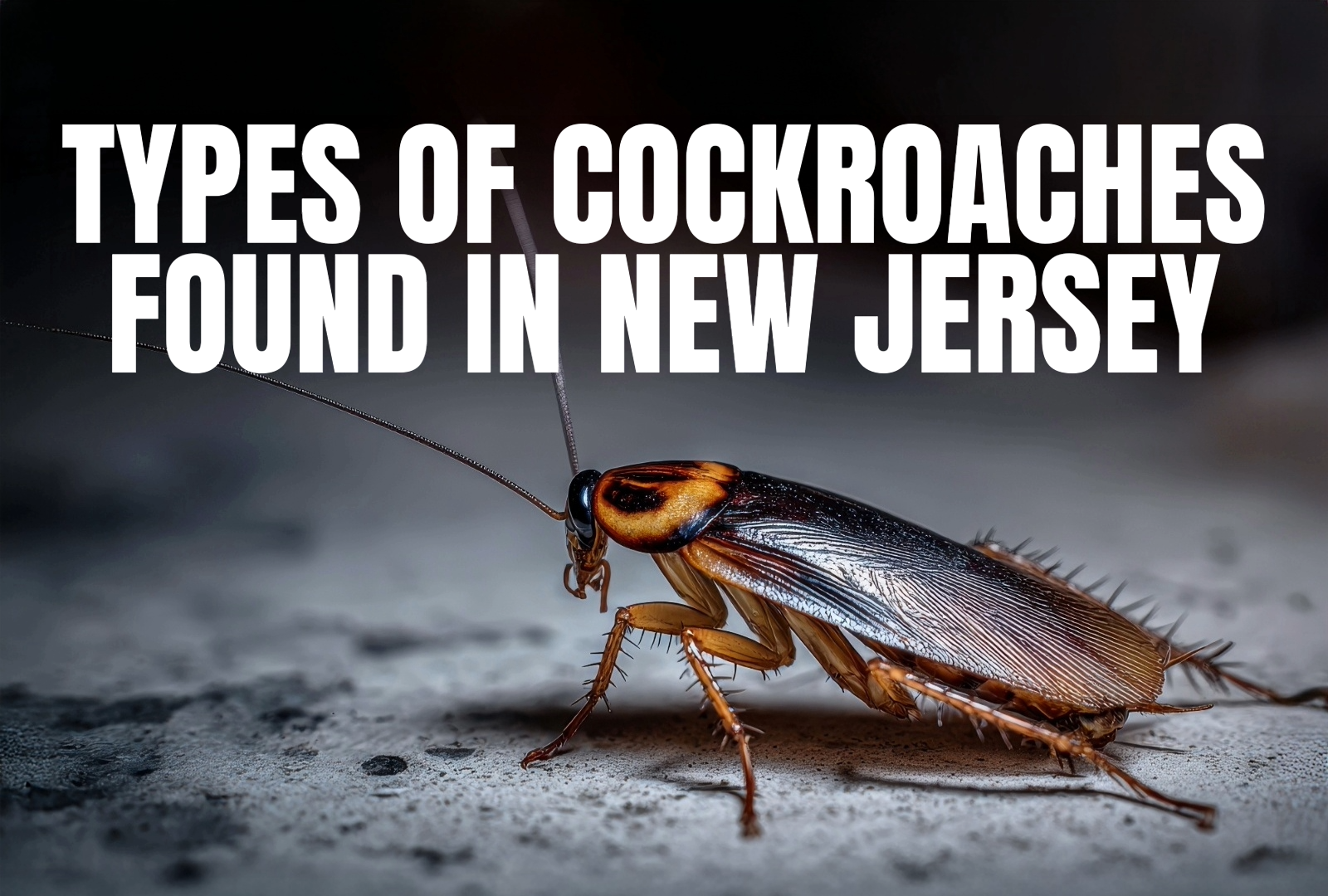
Ever walked out into a dark kitchen and seen a little (or not so little) black bug run across the floor and under the fridge? It’s terrifying! Cockroaches are among the most unwelcome pests for New Jersey homeowners, and for good reason! Known for their ability to survive in almost any environment, these pests can contaminate food, spread bacteria, and trigger allergies or asthma. Unfortunately, New Jersey’s warm, humid summers and dense residential areas create the perfect breeding ground for several species of cockroaches. Understanding which types are most common and how to prevent them is key to keeping your home clean and pest-free.

1. German Cockroach
The German cockroach is one of the most common and troublesome species in New Jersey homes. Measuring about half an inch long, these roaches are light brown with two dark stripes running down their backs.
Where They’re Found
German cockroaches prefer warm, moist areas, which makes kitchens and bathrooms ideal. You’ll often find them behind appliances, inside cabinets, under sinks, and near drains.
Why They’re a Problem
They reproduce quickly; a single female can produce up to 300 offspring in a year, and then within a few weeks those offspring will begin to reproduce at a similar rate… causing an infestation. German cockroaches carry bacteria such as E. coli and Salmonella, and their droppings can trigger allergic reactions in some people.
2. American Cockroach
Also known as the palmetto bug, the American cockroach is the largest species found in New Jersey. Adults can grow up to two inches long and are reddish-brown with a yellow figure-eight pattern on the back of their heads.
Where They’re Found
American cockroaches prefer dark, damp spaces such as basements, crawl spaces, and utility rooms. Outdoors, they live in mulch, sewers, and around drains, but they often move inside during the cold of winter or during extreme weather.
Why They’re a Problem
American cockroaches can spread bacteria and pathogens onto countertops, dishes, and food storage areas. They’re also resilient and capable of surviving for weeks without food or water. Of course, they are also two inches long and scary when they scamper across your bathroom floor!
3. Oriental Cockroach
The Oriental cockroach is sometimes called a water bug, though it is not aquatic. These roaches are about one inch long, dark brown to black, and have a shiny, oily appearance.
Where They’re Found
They thrive in cool, damp environments, often around drains, basements, garbage areas, and under porches. Oriental cockroaches typically enter homes through foundation cracks or gaps around plumbing.
Why They’re a Problem
Because they favor unsanitary areas like sewers and decaying matter, Oriental cockroaches can easily contaminate surfaces and food. They also produce a strong, unpleasant odor when present in large numbers.
4. Brown-Banded Cockroach
Smaller than other species, the brown-banded cockroach measures about half an inch long and is easily recognized by two light-colored bands across its body.
Where They’re Found
Unlike most roaches that prefer moisture, brown-banded cockroaches are attracted to warm, dry areas. They’re often found in bedrooms, behind picture frames, inside electronics, or high on walls and ceilings.
Why They’re a Problem
Their preference for drier areas makes them harder to detect since they often avoid kitchens and bathrooms. They can spread allergens and bacteria and are often carried into homes through infested furniture or boxes.
5. Pennsylvania Wood Cockroach
Although their name might be deceiving, the Pennsylvania wood cockroach is common in wooded areas across New Jersey. They are typically brown with wings and prefer to live outdoors.
Where They’re Found
These roaches often enter homes accidentally during mating season in the spring by flying toward lights or crawling through windows, vents, and gaps in siding.
Why They’re a Problem
Unlike other species, Pennsylvania wood roaches don’t usually infest homes permanently. However, their presence in large numbers can still be unsettling and may indicate easy entry points around your home.
Cockroach Prevention Tips for NJ Homes and Businesses
Keeping your home or business clean and sealed is the most effective way to prevent cockroach infestations. Here are some proven prevention strategies:
- Eliminate food sources: Store food in airtight containers and clean up spills or crumbs right away.
- Fix moisture issues: Repair leaky pipes, improve ventilation, and avoid standing water.
- Seal entry points: Caulk cracks around doors, windows, and foundations; install door sweeps; and seal gaps around pipes or vents.
- Maintain yard cleanliness: Keep mulch and firewood away from your foundation and trim shrubs or branches that touch the house.
- Regularly empty trash bins: Keep indoor and outdoor garbage tightly sealed.
Even with excellent prevention habits, cockroaches are persistent and can enter homes through drains, vents, or deliveries. Once inside, they reproduce rapidly, so professional treatment is often necessary to completely eliminate the problem once it starts.
New Jersey’s Cockroach Extermination Experts
If you’ve seen signs of cockroaches in your home, it’s best to act fast before a small issue becomes an infestation.
At ELDER Pest Control, we specialize in identifying and eliminating all types of cockroaches found in New Jersey homes and businesses. Our trained technicians use safe, effective treatments that target both adult roaches and their eggs, helping ensure long-term protection for your family and property.
Contact ELDER Pest Control today to schedule your inspection and take back control of your property!